
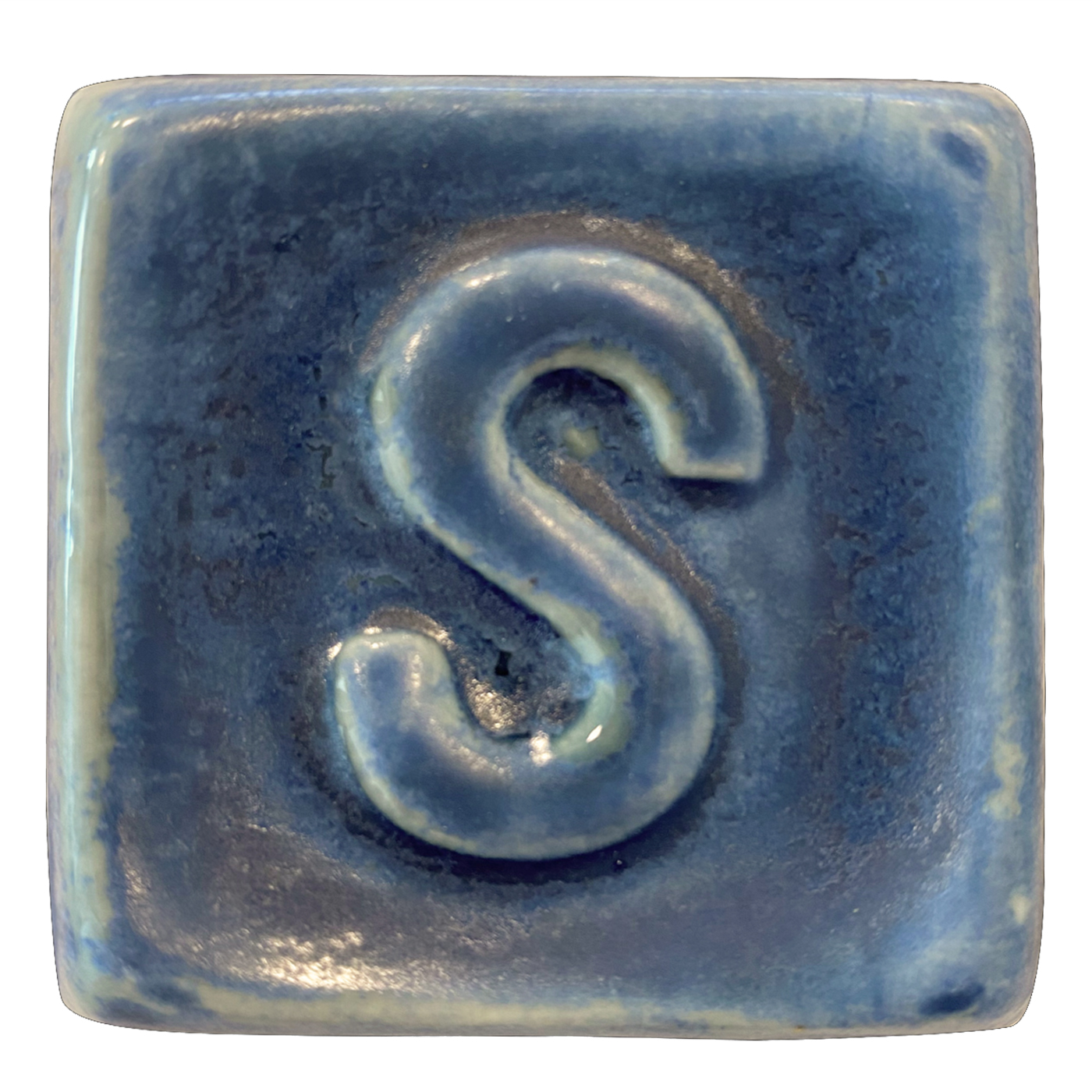
SP 1221 – Hamsilos
Features:
. 1200 °C-1220 °C
. Food Safe
. High Fire
. Tends to Run
Product Code: SP 1221 – Hamsilos
Recommended Firing Range: 1200–1250°C
Form: Supplied in liquid form in 175 g, 500 g, and 1000 g packaging.
Application Characteristics
- This glaze exhibits varying surface characteristics depending on the firing temperature and application thickness. Between 1200–1220°C, thin applications produce a matte surface with dynamic deep blue tones and a vibrant visual movement. Thicker applications result in darker blue shades with a more pronounced flowing effect on the surface.
- Depending on the application thickness and firing temperature, this glaze may develop crystal formations. At lower temperatures, the primary surface displays a matte character, while increasing temperatures may encourage crystal growth and localized glossy effects.
- At 1250°C, the glaze surface becomes noticeably glossier and the color lightens. Thin applications reveal lighter blue tones, while thicker applications develop rich and more intense blue shades.
- Surface finish may vary from matte to highly glossy depending on the firing temperature.
- The glaze has high opacity at lower temperatures. As the firing temperature increases, it may become semi-opaque.
- No running tendency is observed between 1200–1220°C. Between 1220–1250°C, running may occur depending on application thickness.
- This glaze is not acid resistant. Therefore, contact with acidic foods is not recommended.
- Contains no toxic substances.
Application Methods
IMPORTANT NOTE:
In crystalline glazes, both thin and thick applications are intentionally used together on the same surface to support crystal development. If the glaze is applied excessively thick across the entire surface, crystals form densely, merge together, and completely cover the surface. This creates what is known as a crystal matte effect — a matte and slightly textured appearance.
In very thin applications, crystal development remains weak. For this reason, on vertical surfaces, a thicker application is recommended on upper areas, gradually becoming thinner toward the lower sections. On horizontal surfaces, transitions between thin and thick areas help distribute crystals more evenly across the surface.
Thanks to this process, each piece develops its own unique crystal pattern.
Crystalline glazes generally provide more efficient results when applied using spray gun or pour/dip methods.
- For brush applications, the recommended thickness is 1 to 3 coats on the same surface.
- For spray or dipping methods, adding approximately 5–30% water is recommended to adjust the density.
- Recommended Baume range: 45–55.
Testing Recommendations
- We recommend that customers using our glazes for the first time create test tiles using their own kiln schedules and application methods to better understand the results. Preparing test tiles on both vertical and horizontal forms according to your application technique will help you become familiar with the glaze.
- In the sample image, the glaze was applied on BNC 1200 white porcelain clay. Due to the glaze’s translucent nature, the color and artistic effects may vary on colored clay bodies.
- When combining artistic glazes with other artistic or standard glaze groups, we recommend conducting tests beforehand to avoid possible incompatibilities or defects.
Care and Cleaning
- When washed in a dishwasher, the glaze surface may be exposed to high-temperature chemical solutions, which can cause matting or variations in its artistic appearance.
Safety
- The use of personal protective equipment during application is recommended.
- Since glazes react to heat, keep away from fire and open flame sources during application.
- Children should use the product under supervision.
Storage
- Store products in airtight conditions and protect them from direct sunlight.
- If stored for a very long time, the glaze may begin to dry out. In this case, add a small amount of water, mix thoroughly, and strain before use.
- After opening, over extended shelf life periods, the brushing agents, stabilizers, and antibacterial additives in the glaze may gradually lose effectiveness. This usually does not affect the fired result, but it may influence application performance, making the glaze harder to apply or causing surface cracking before firing. If you encounter such issues, please contact us for solution recommendations.
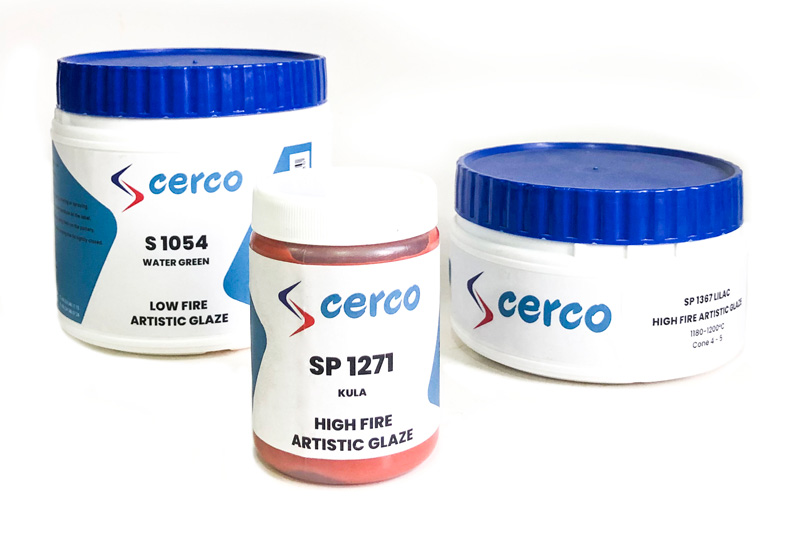
- All ready to use glazes are available in 118 ml, 335 ml and 670 ml jars.
- Our glazes are formulated ready to use in liquid forms.
- It is recommended to apply by brush two to three even coats.
- For other application methods you can add 5 %- 10 % water for diluting.
- Before application, the glaze should be homogeneous.
- We suggest you to test glazes on tiles and later on make final applications.